

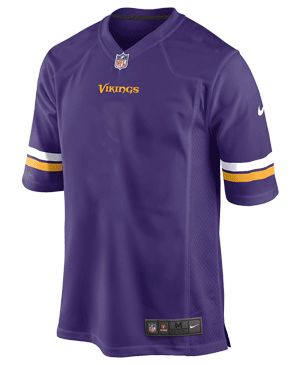
Minnesota Vikings News and Links: Are The Vikings Set At Defensive Tackle?
As I sat down to prepare for the upcoming NFL season, news broke that the Indianapolis Colts had signed quarterback Carson Wentz to a new contract. This signing caught my attention and got me thinking about the implications it could have for the league as a whole. The Wentz signing is significant for a number of reasons, not least of which is the impact it could have on the Philadelphia Eagles, Wentz’s former team. Could this signing be a precursor to a trade involving Eagles wide receiver JJ Arcega-Whiteside? It’s certainly a possibility, and one that I wouldn’t be surprised to see play out in the coming weeks.
The Wentz signing also raises questions about the quarterback’s performance and potential moving forward. After a promising start to his career, Wentz has struggled in recent seasons with injuries and inconsistent play. Will a change of scenery in Indianapolis be the catalyst he needs to return to form? Or will he continue to struggle and fail to live up to the expectations that come with being a former first-round pick? These are questions that only time will answer, but they add an intriguing layer of drama to an already fascinating offseason.
But perhaps the most intriguing question raised by the Wentz signing is not about the quarterback himself, but about the coaching staff in Miami. In the midst of all the Wentz news, I found myself wondering why Dolphins head coach Brian Flores has not utilized true run-stuffing defensive players in his schemes. Flores is widely regarded as a defensive guru, known for his ability to create complex and effective game plans that stymie opposing offenses. So why has he not prioritized adding big, physical run-stuffers to his roster?
It’s a question that has puzzled me for some time, and one that I believe deserves further exploration. Run defense is a critical aspect of any successful NFL team, as stopping the opposing team’s ground game can force them into predictable passing situations and make it easier for the defense to generate turnovers. Yet the Dolphins, under Flores’ leadership, have consistently struggled to stop the run, ranking near the bottom of the league in rushing yards allowed per game.
One possible explanation for Flores’ approach to run defense is that he prioritizes speed and versatility over size and physicality. By fielding smaller, quicker defenders who can cover more ground and make plays in space, Flores may believe that he can better contain the modern NFL offenses that rely on spread formations and quick passing attacks. While this strategy can be effective against certain opponents, it can leave the defense vulnerable to power running teams that can control the line of scrimmage and wear down the smaller defenders.
Another factor that may be influencing Flores’ decision to eschew traditional run-stuffers is the changing nature of the NFL game itself. With more teams adopting pass-heavy offensive schemes and using running backs as receivers out of the backfield, the role of the traditional run-stuffing defensive tackle or linebacker has diminished in importance. In today’s NFL, defenses must be able to defend the pass as well as the run, and having versatile defenders who can excel in coverage as well as against the run has become increasingly valuable.
Despite these potential explanations, the fact remains that the Dolphins have struggled to stop the run under Flores’ leadership. While the team has made significant strides on defense in other areas, including pass rush and coverage, their inability to consistently shut down opposing running games has been a persistent issue. This raises the question of whether Flores needs to rethink his approach to run defense and prioritize adding bigger, more physical defenders to his roster.
One possible solution for the Dolphins could be to target run-stuffing defensive linemen and linebackers in the upcoming NFL draft or free agency. By adding players who excel at clogging running lanes and shedding blocks to make tackles in the backfield, the Dolphins could improve their run defense and become a more well-rounded defense overall. While this approach may require some adjustments to Flores’ defensive schemes and play-calling, it could pay dividends in terms of slowing down opposing running games and giving the offense more opportunities to score.
In conclusion, the signing of Carson Wentz by the Indianapolis Colts has sparked a number of interesting questions and discussions about the future of the NFL. From the potential implications for the Eagles to the ongoing struggles of the Dolphins’ run defense, there are no shortage of storylines to follow as the offseason unfolds. As a fan of the game, I am excited to see how these narratives develop and what new surprises and twists the NFL has in store for us in the coming months. And who knows, maybe we’ll even get some answers to the questions that have been on our minds for so long. Only time will tell.
Source: Daily Norseman





















 LIVE
LIVE LIVE
LIVE


